
Saturday and Sunday - CLOSED30 Devonshire Street
Marylebone
London W1G 6PU
Knee Arthroscopy
What Is Knee Arthroscopy?
Knee Arthroscopy is a procedure in which the doctor examines your knee with an instrument called an arthroscope. An arthroscope is a tube with a light on the end that is inserted in your knee and projects an image of the inside of your knee onto a TV monitor. The arthroscope is about the diameter of a pencil.
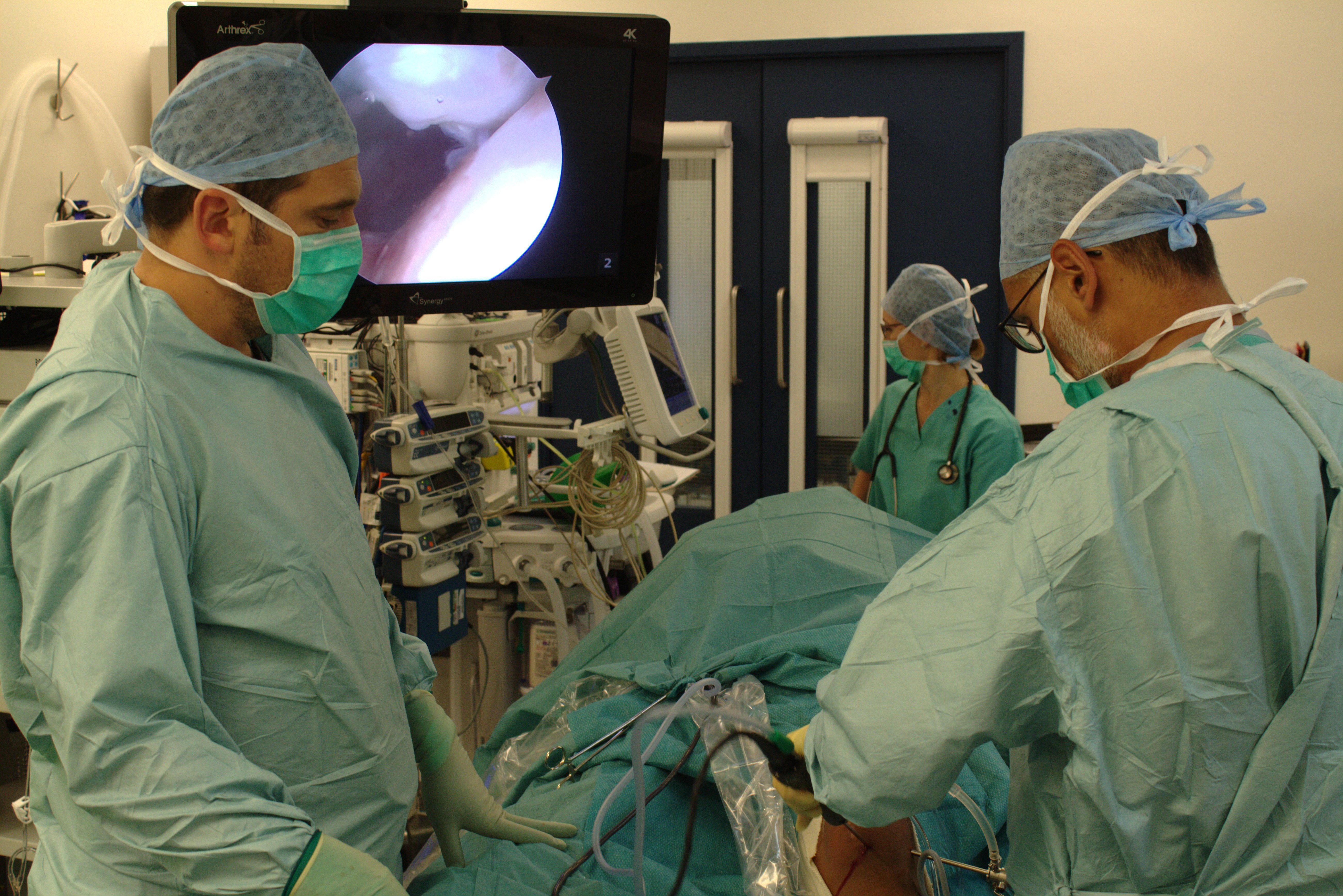
Knee Arthroscopy
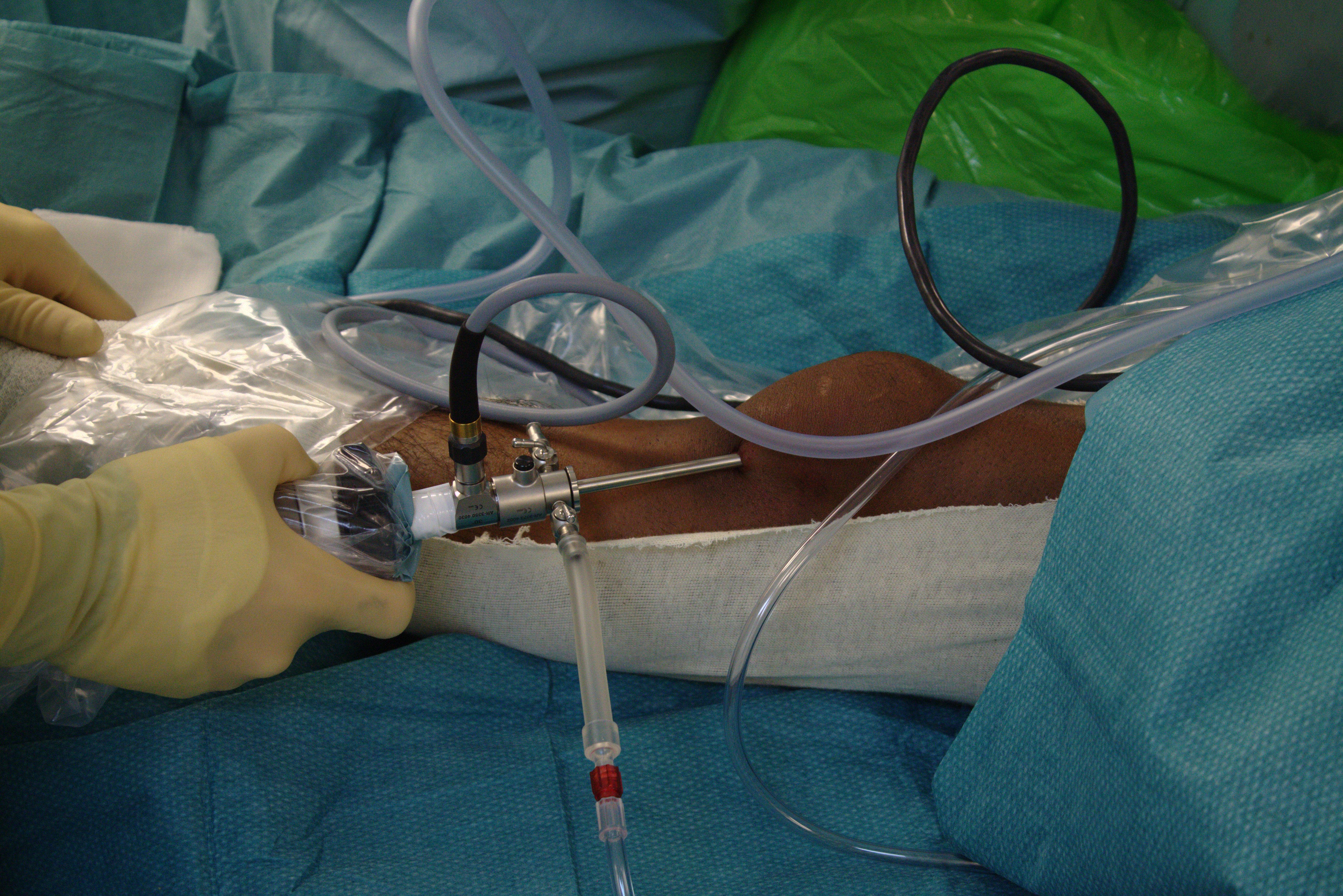
Arthroscopy Camera in the Knee
When is Knee Arthroscopy used?
Knee Arthroscopy is used to to treat the cause of pain, swelling, tenderness, or weakness in your knee.
Alternatives to having Knee Arthroscopy:-
- Limit your activity.
- Take anti-inflammatory drugs to reduce swelling.
- Wear a brace.
- Have physical therapy.
- Have open knee surgery.
- Have MRI (Magnetic Resonance Imaging).
- Choose not to have treatment, recognizing the risks of your condition.
You should ask your doctor about these choices.
How Do I Prepare For Knee Arthroscopy?
It is important to plan for your care and recovery after the Knee Arthroscopy operation, especially if you are to have general anesthesia. Allow for time to rest and try to find other people to help you with your day-to-day duties.
Follow any instructions your doctor may give you. Do not eat or drink anything after midnight or the morning before the procedure. Do not even drink coffee, tea, or water after midnight.
What Happens During The Knee Arthroscopy Procedure?
You will have a general, regional, or local anesthetic. A general anesthetic will relax your muscles and make you feel as if you are in a deep sleep. Both local and regional anesthetics numb part of the body while you remain awake. All three types of anesthesia should keep you from feeling pain during the operation.
The doctor will then insert the arthroscope, a tube containing a saltwater solution, and a probe instrument into the lower part of your knee. He or she will inject fluid into the knee.
Your doctor may find loose material in the knee or a tear in the cartilage or ligaments. The doctor can repair the tears or remove loose pieces of cartilage using small instruments and the arthroscope.
After the procedure the doctor will close the small openings with one or two stitches or sticky tape.
What Happens After The Knee Arthroscopy Procedure?
- You can go home the day of the Arthroscopy procedure.
- You should take it easy for at least the next 2 or 3 days.
- Keep your leg elevated, with your foot higher than your knee and your knee
- higher than your hip.
- Start bending the knee as soon as possible.
- Use your crutches until you can walk nearly normally.
- Do light strengthening exercises if instructed to do so by your doctor.
- Ask your doctor when you can resume full activity. Your recovery time will depend on what was done and how much arthritis you have in your knee.
Ask your doctor what other steps you should take and when you should come back for a checkup.
What Are The Benefits Of Knee Arthroscopy?
The main benefit is that Knee Arthroscopy may correct your knee problem thereby saving you from having a large incision, which requires a longer stay in the hospital, more discomfort, and greater expense.
What Are The Risks Associated With Knee Arthroscopy?
- There are some risks when you have general anesthesia. Discuss these risks with your doctor.
- A local or regional anesthetic may not numb the area quite enough and you may feel some minor discomfort.
- Numbness around the small incisions can occur.
- During repair of the cartilage, nerve or artery damage can occur, which can cause numbness, weakness, or pain in your leg and foot. This rarely happens.
- Infection and bleeding may occur.
- Knee arthroscopy is a minor operation
You should ask your doctor how these risks apply to you.