Knee Replacement Surgery
Knee replacement surgery is performed for the treatment of arthritis, when the patient symptoms have been poorly controlled by non-surgical methods.
Joint Replacement involves cutting away (resecting) the diseased portion of the joint, and replacing it with man-made materials; which then articulate (move) with each other in a pain-free fashion helping to restore movement and function.
The types of knee replacement surgery available include, partial knee replacement surgery (unicondylar knee replacement surgery and patellofemoral knee replacement surgery) or total knee replacement surgery.
» Read more about knee replacement surgery
Computer Guided Knee Surgery
Recent advances in technology, have made available the use of computers, that are used during surgery to help accurately perform knee replacement surgery. It works like GPS systems used in motor vehicles.
Partial Knee Replacement
In partial knee replacement surgery, only the diseased portions of the knee are replaced. For the majority of patients this technique is not applicable, as the diseased process often involves all parts of the knee. However in a significant proportion of patients it is possible to replace just the diseased portions of the knee.
Unicondylar Knee Replacement
The commonest pattern of knee arthritis is where the medial compartment (inside of the knee) is particularly affected by arthritis, the remaining parts of the knee joints are disease free. In these patients one can generally perform minimally invasive knee replacements of just the diseased inner portion of the knee. The operation is performed through a 5 – 10 cm incision over the inner aspect of the knee.
Patellofemoral Knee Replacements
In certain patterns of knee arthritis, only the knee cap and its underlying surface has been involved from the arthritic process. In these patients a surgical option is to replace just the knee cap and its underlying cartilage.
Total Knee Replacement
For the majority of patients with arthritis that is badly controlled from non- surgical means, total knee replacement is the only alternative.
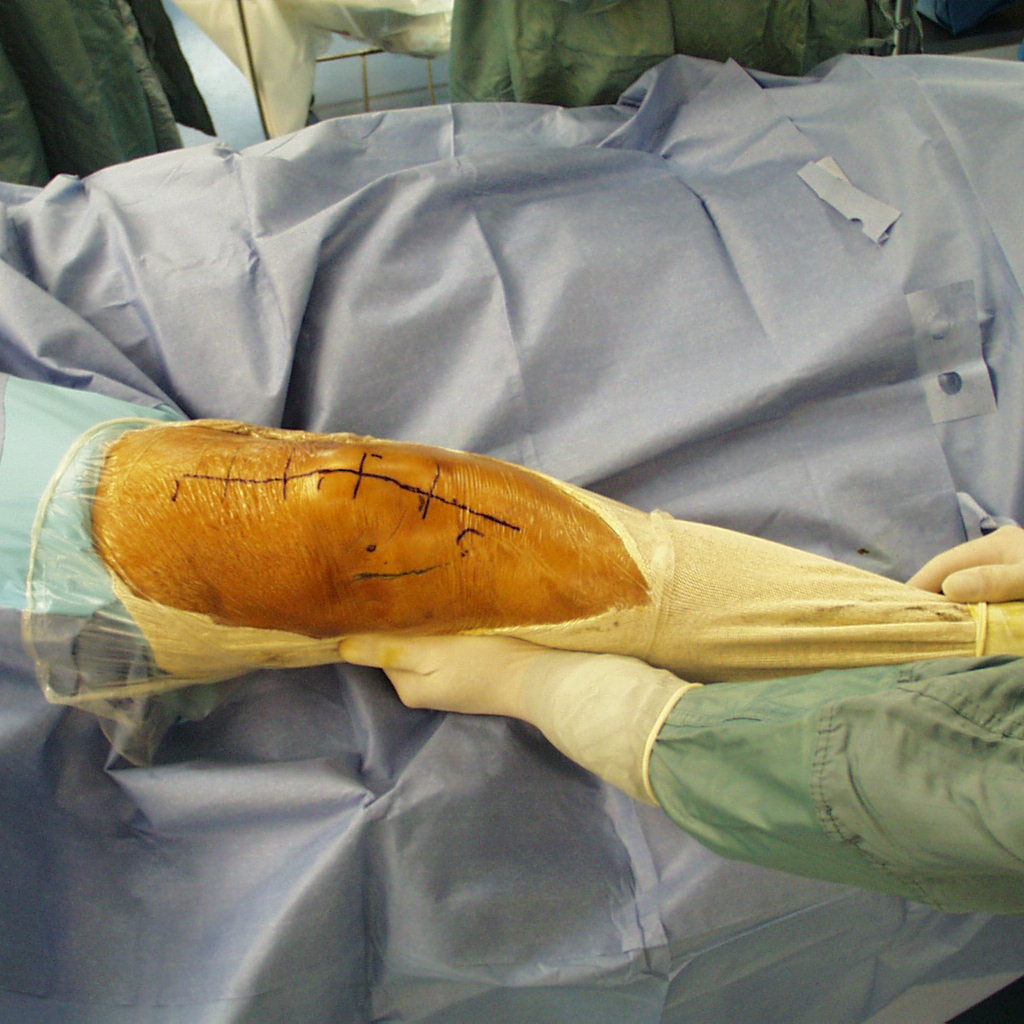
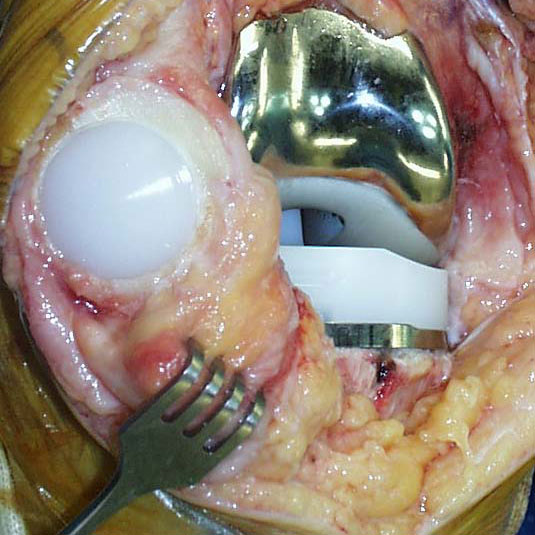
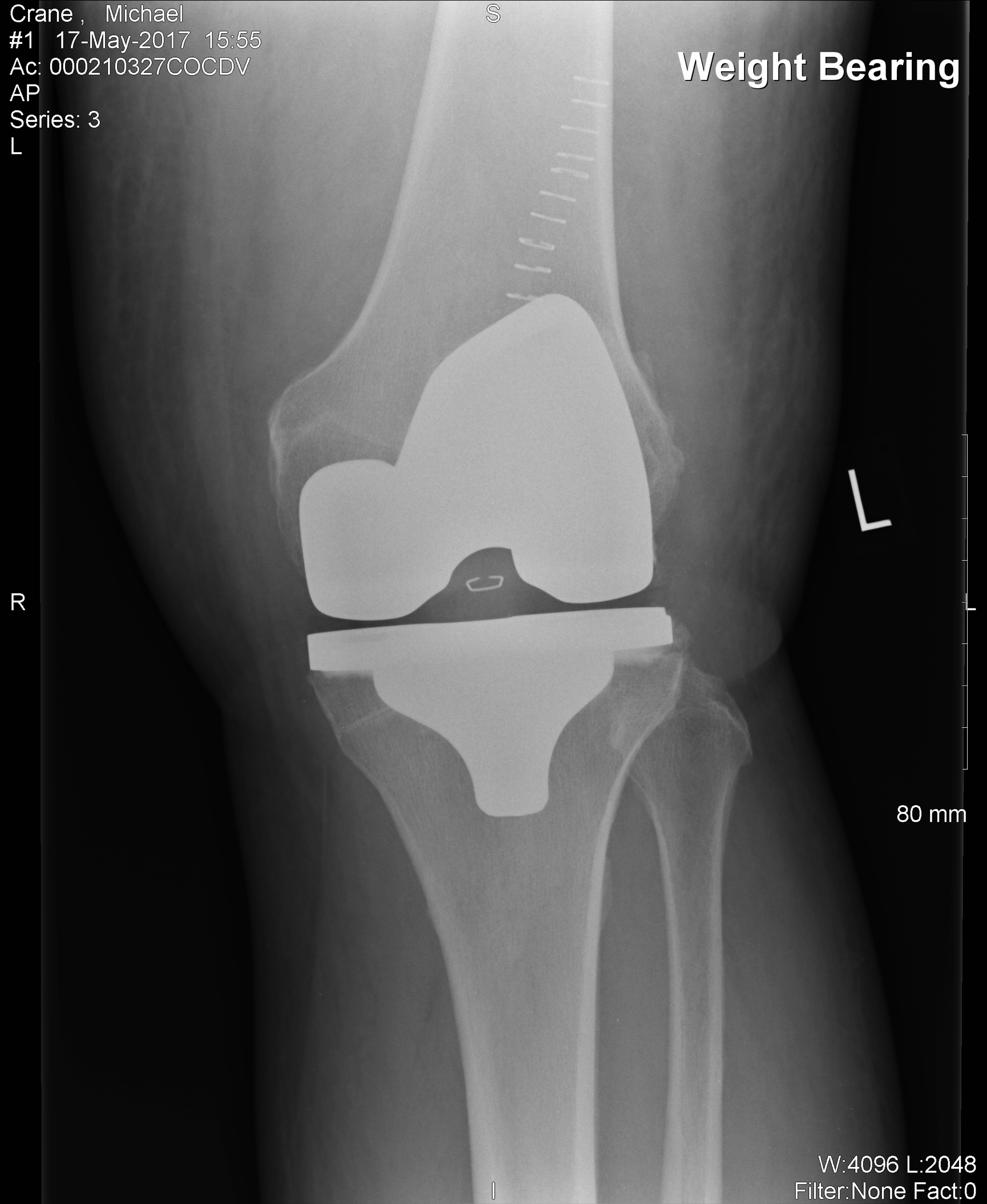
The operation consists of an incision made from 15 to 20 cm over the front of the knee, through this incision the diseased portions of the knee are cut away(resected) and they are substituted with metal and plastic components. These components articulate (move) together. The operation usually takes 1 hour to perform and is done under a general anaesthetic. Patients usually stay for 3 – 5 days in hospital.
» Read more about the benefits and risks of total knee replacement surgery
Revision Knee Replacement
The majority of knee replacement lasts for over 15 years. Unfortunately there are occasions when knee replacement surgery has to be performed again (revision surgery). Common reasons for redoing knee surgery include loosening, infection, and wear of the moving (articulating) parts. The operation is performed by removing the old knee replacement components and replacing them with newer ones.